When progress feels slow, your brain wants an immediate explanation.
Usually it picks the harshest one.
The better move is simpler: run a 10-minute check before you call it a plateau.
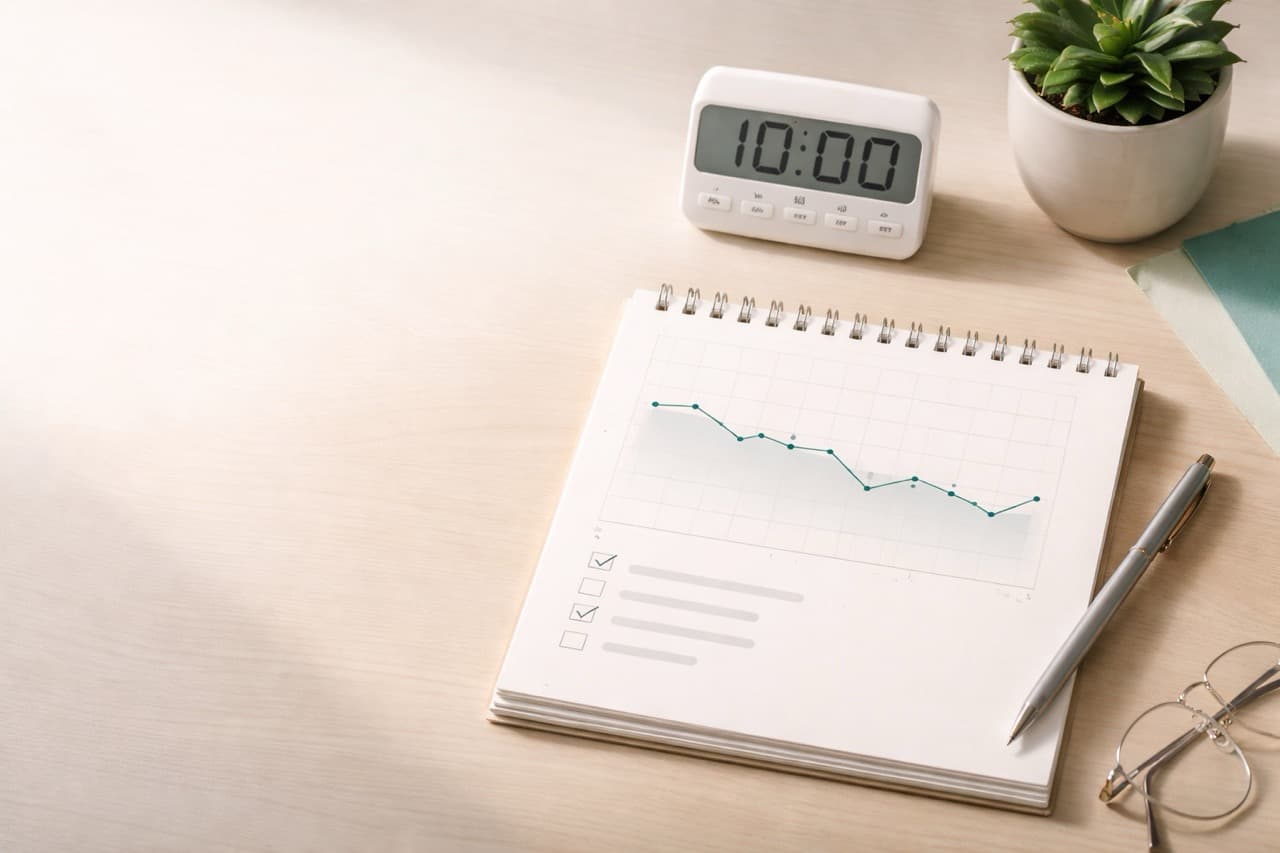
If you use a 7-day trend instead of one daily weigh-in, any single data point drops from 100% of your interpretation to roughly 14%. That one shift alone reduces panic decisions.
The longer-horizon evidence also argues against overreacting to one flat week. In the STEP 4 randomized trial, adults who continued semaglutide after the 20-week run-in lost an additional 7.9% body weight by week 68, while the placebo-switch group regained 6.9%. One noisy week is not the same thing as a true long-term stall.
Quick answer
Most apparent plateaus are short volatility windows, routine friction, or context changes hiding the real signal.
Before you change strategy, check four things together: your 7-day trend, routine friction, one non-scale marker, and any operational blocker that distorted the week.
The 4 checkpoints at a glance
- Trend window: Use a 7-day average, not one weigh-in, to tell whether the stall is real or just noisy timing.
- Routine friction: Review sleep, hydration, movement, meals, and stress to see whether the process leaked before the result did.
- Non-scale marker: Check waist, fit, energy, or hunger so you can spot progress the scale is not showing yet.
- Operational blocker: Flag refill delays, travel, schedule disruption, or illness before you judge the week like normal data.
The 10-minute check
1) Trend window
Use a 7-day average, not single weigh-ins.
2) Routine friction scan
Rate these from 1-5:
- sleep consistency
- hydration
- movement baseline
- meal structure
- stress load
3) Non-scale marker
Check at least one marker:
- waist trend
- fit changes
- energy consistency
- hunger control
4) Operational blockers
Any refill, pharmacy, travel, or schedule disruption this week?
Interpretation rule
If routine friction is high, call it friction, not plateau.
Fix the process for 7 days first. Then reassess trend.
That rule is stricter than panic, but it matches the evidence better. Effective GLP-1 treatment is measured over months, not a single discouraging weigh-in.
If you need a longer review window, use Plateau After 3 Months for a deeper audit or Scale Stalls While Your Body Changes when the scale and your body are telling different stories.
Velto implementation
Use Velto’s trend view + weekly summary to compare signal quality against scale movement.
This is how you avoid panic loops.
References
- Rubino et al., JAMA 2021: STEP 4 randomized clinical trial
- Wilding et al., NEJM 2021: Once-weekly semaglutide in adults with overweight or obesity
Related reading
- Plateau After 3 Months
- Scale Stalls While Your Body Changes
- Plateau or Noise? Weekly Decision Framework