BMI calculator: calculate and understand your BMI
Calculate your body mass index in seconds. Add your waist measurement for extra context — without an account and without storing your data.
Calculate BMI
Illustrative exampleOptional: adds waist-to-height context to your BMI.
No account. No data storage.
Your BMI
28.4
Classification
Overweight
Waist to height
0.52
Additional context
0.5–0.59
A guide, not a diagnosis.
BMI does not account for muscle mass, body composition, fat distribution or individual medical factors.
For adults aged 18 and over.
What your result means
BMI relates your weight to your height. It is a useful screening measure for adults, but it is not a diagnosis or a complete picture of your health.
| BMI | Classification | |
|---|---|---|
| < 18.5 | Underweight | |
| 18.5–24.9 | Normal weight | |
| 25.0–29.9 | Overweight | |
| 30.0–34.9 | Obesity class I | |
| 35.0–39.9 | Obesity class II | |
| ≥ 40.0 | Obesity class III |
Adult classification based on World Health Organization thresholds.
Why waist circumference adds context
BMI does not distinguish muscle from fat or show where body fat is distributed. When BMI is below 35, waist-to-height ratio can add context about central fat distribution.
Use only as additional orientation. Not intended during pregnancy, for children, eating-disorder contexts or conditions affecting height.
BMI and GLP-1: a starting point, not the whole story
One BMI value cannot determine whether a treatment is suitable. Treatment decisions require an individual assessment by a qualified healthcare professional.
Why one BMI value is not enough during GLP-1 treatment
BMI can provide a starting point. Over time, the relationship between medication, weight, appetite, symptoms and daily routines provides more useful context.
Medication
What you logged and when.
Weight
How the trend changes over time.
Appetite
How hunger and fullness shift.
Side effects
When symptoms appear and change.
Habits
Nutrition, movement, sleep and water.
A single value
A moment without its surrounding context.
A timeline
Patterns across weeks and months.
Move from a BMI moment to progress with context
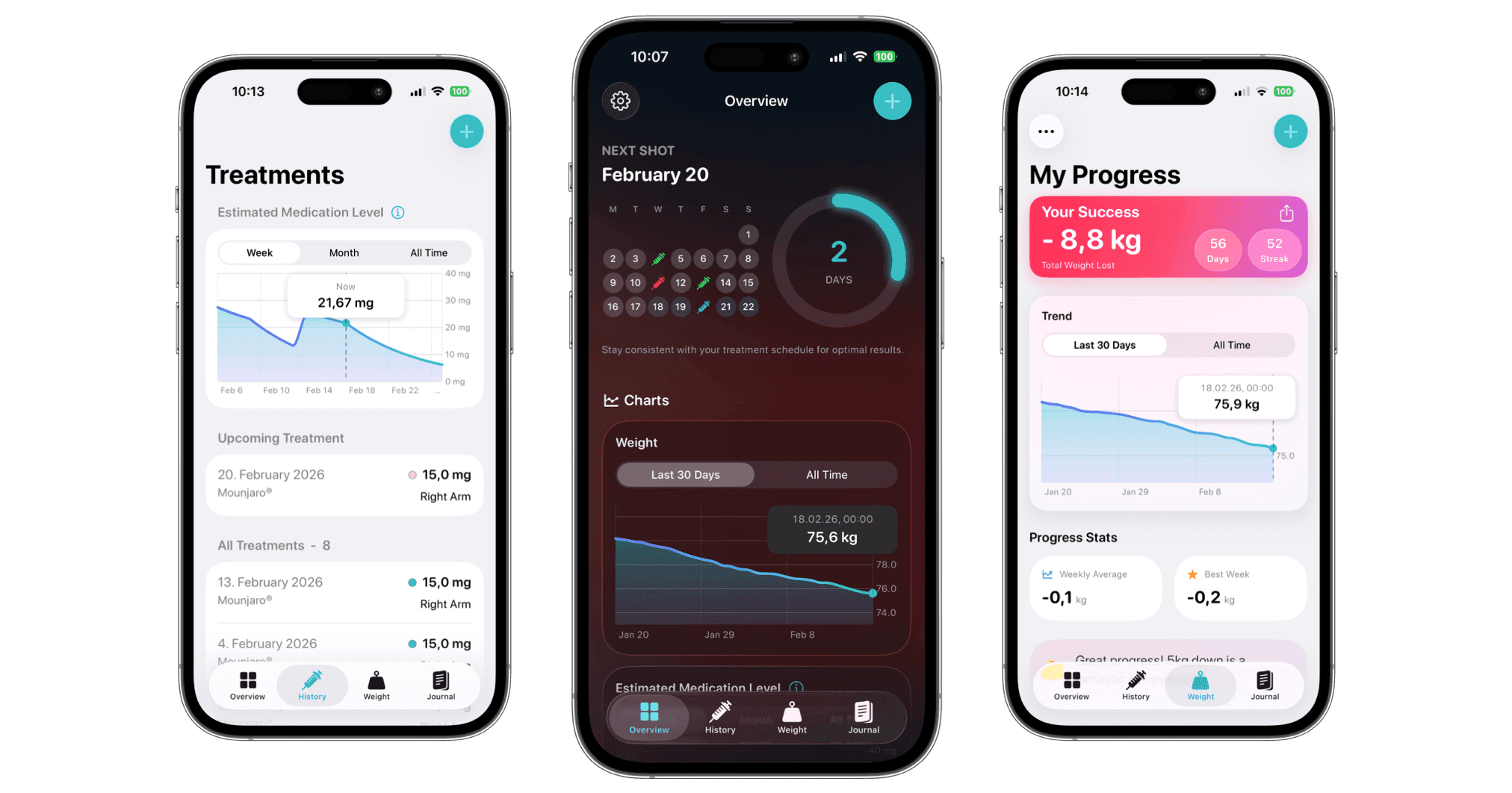
Velto helps you record medication, weight, symptoms, appetite, nutrition, water, steps and mood in one private timeline.
- Injection and oral plans
- Custom dosages and intervals
- Long-term weight and progress views
Velto is a tracking companion. It does not diagnose or recommend treatment or dosing.
Frequently asked questions about BMI
How is BMI calculated?
BMI divides weight in kilograms by height in metres squared.
BMI = kg ÷ (m × m).
What BMI is considered normal weight for adults?
The standard adult orientation range is 18.5 to 24.9. Individual health cannot be assessed from this range alone.
Is BMI accurate when someone has a lot of muscle?
BMI cannot distinguish muscle from fat, so it may give a misleading impression for people with high muscle mass or other differences in body composition.
Why does the calculator optionally ask for waist circumference?
Waist-to-height ratio can add context about central fat distribution when BMI is below 35. It is still only an orientation measure.
Can BMI show whether GLP-1 treatment is suitable?
No. BMI alone does not decide whether a treatment is appropriate. Discuss suitability, risks and treatment decisions with a qualified healthcare professional.
Is this calculator suitable for children or pregnancy?
No. It is for adults aged 18 and over and is not intended for pregnancy, children, eating-disorder contexts or conditions affecting height.
Methodology and sources
Last updated: August 2026
The calculation runs locally in your browser. Entries are not sent to a server or stored.
Share this BMI calculator
Useful for patients, support services or editorial resources? Link directly to this free calculator.